Meqqusaalik

Deliver to
🇬🇱 Kalaallit Nunaat
Language
🇬🇧 EN

The Sled Dog – Our Ancient Companion

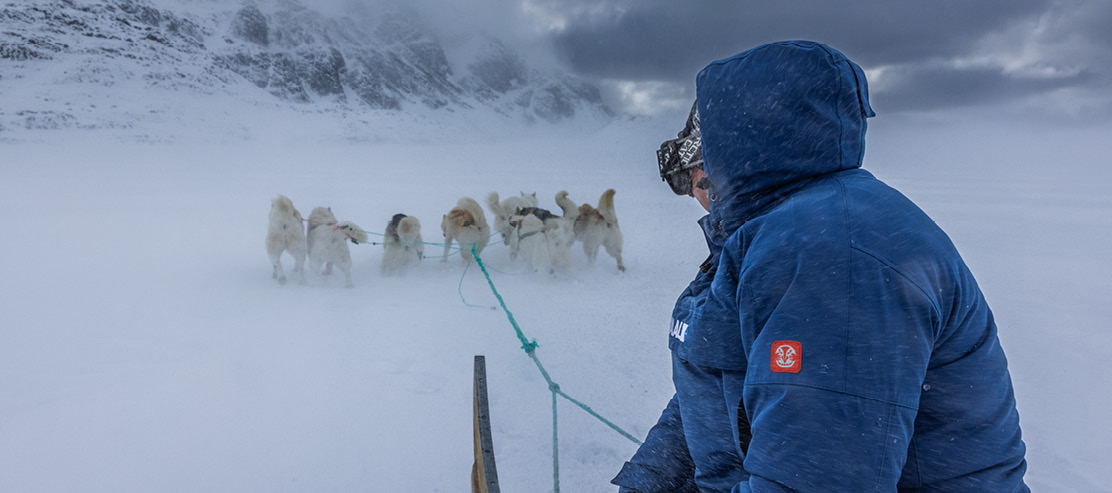
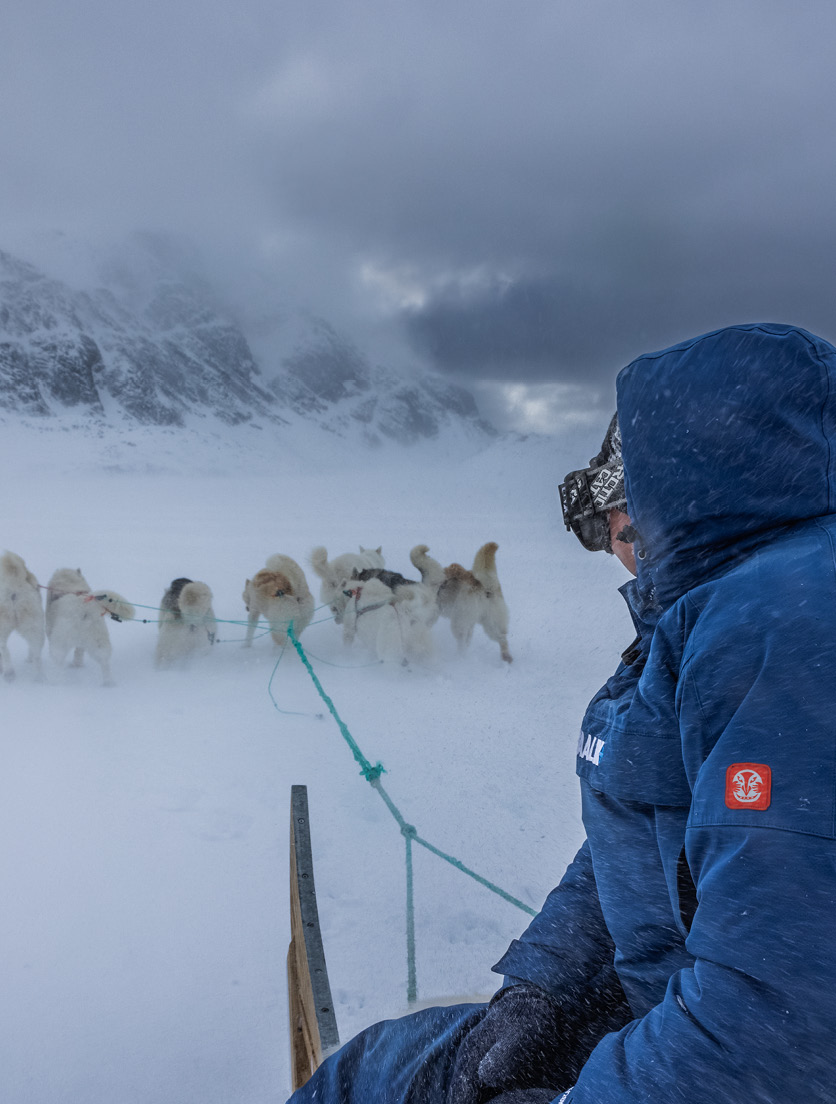
We walked together to Greenland’s rich hunting grounds. Since then, the cooperation between sled dogs and humans has been crucial in Greenland. It is a truly unique relationship, found in very few other places on Earth.

Our Greenlandic sled dog is the world’s oldest dog breed, having adapted over thousands of years to life in the Arctic. Its genetic heritage is so pure that it remains, by and large, identical to its ancestors, which lived in Siberia 9,500 years ago. The oldest dog bones found in this country date back to the Saqqaq culture, which most likely used dogs for hunting. It is not until later in history, with the Thule culture, that we find certain evidence of dog sleds.

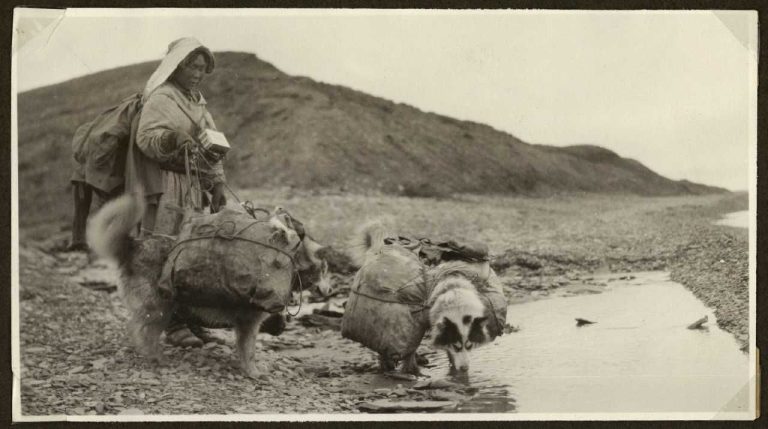
Since then, the dogs have carried us safely between hunting grounds, allowing us to hunt across greater distances and bring food home to our settlements. With the dogs, we were able to move with the game, discover new areas, and settle freely across the country.

The Cooperation Between Dog and Human

The close cooperation between dogs and humans has been vital to our survival and resilience. The dogs’ strength, endurance, and ability to navigate our harsh natural environment made them indispensable. When snowstorms struck and wiped everything from sight, it was precisely this close cooperation between human and dog that showed the way home. That remains the case today. In addition, many hunters train their dogs for hunting, so that they can, for example, locate a seal’s breathing holes beneath the ice. They can also be used in polar bear hunting, where the dogs are released to surround the bear, giving the hunter a better line of sight. But the dogs can also pull other heavy loads besides sleds, for example when a boat needs to be hauled ashore. At the same time, they are also excellent guard dogs, able to warn against polar bears approaching the towns.

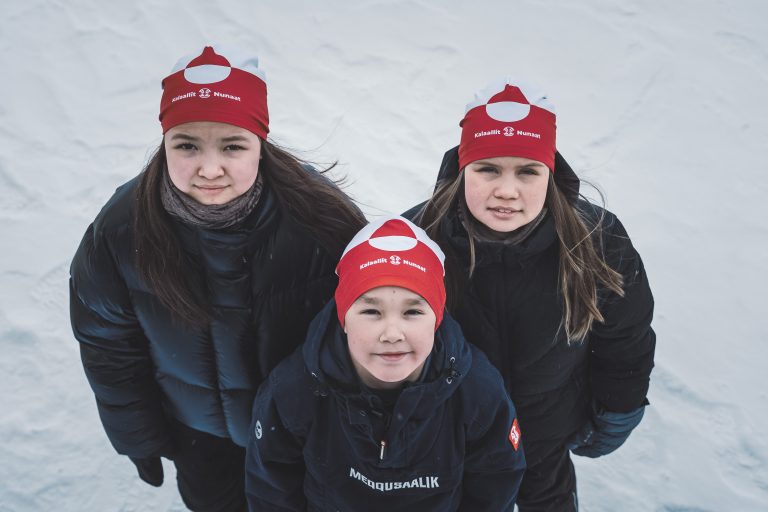
In recent years, more women have taken up dog sledding. The standard is high among both new and experienced drivers, and for many it is a community centred on beautiful, well-cared-for dogs, where training, cooperation, closeness, and responsibility for the dogs are central. Today, keeping sled dogs in Greenland is to a large extent a hobby and a way of life, often combined with tourism. People travel here from all over the world to experience nature from a dog sled. In this way, tourism has also become a new means of carrying the dog sledding culture forward.

From Everyday Life to Cultural Heritage

The world is changing, and dog sledding culture is changing with it. There are only a few places left where keeping sled dogs is an indispensable part of hunters’ daily lives. In most places, sled dogs have been replaced by ATVs or snowmobiles, which do not need to be fed every day and can move quickly across the terrain. At the same time, the winter ice is becoming thinner and climate change more apparent.

Although there are fewer dogs today, the culture lives on within us as part of our DNA. They are part of our stories, traditions, and identity — something that is not only about the dogs themselves, but also about a unique craft that has been passed down from generation to generation, with knowledge of the sled, the lines, the harnesses, the knots, and their maintenance. This makes the sled dog a bearer of culture, knowledge, and craftsmanship that is still worth protecting, because it unites and strengthens us as a people.


The Sled Dog’s Extraordinary Survival Genes

  • They are muscular and can absorb oxygen more efficiently than other dogs. This enables them to endure long, demanding journeys while pulling a sled.
  • They can eat a very high-fat diet without the risk of becoming overweight or developing cardiovascular problems.
  • For long periods, they can replace drinking water with snow and eat frozen meat or fish.
  • Their thick winter coat, rich in lanolin, keeps them dry and warm, even in rain and frost.
  • They can sense even the slightest changes in temperature.
ALLAASERISAT ALLAT

Elementor #23232

Back Arnarulunnguaq The little woman of great stature The woman of the Fifth Thule Expedition, 1921–24 Arnarulunnguaq means ‘the little

DISCOVER MORE
Join Waitlist Sign up to be notified when this product is back in stock. Please enter a valid email address. By subscribing, you agree to our Privacy Policy.
Deliver to
🇬🇱 Kalaallit Nunaat
Language
🇬🇧 EN
Contact
J.M. Jensenip
Aqq. 2 3911
Sisimiut Grønland
E: [email protected]
T: +299 862 400
Deliver to
🇬🇱 Kalaallit Nunaat
Language
🇬🇧 EN
Contact
J.M. Jensenip
Aqq. 2 3911
Sisimiut Grønland
E: [email protected]
T: +299 862 400

Select type:

Size guide for tops

SIZE ARMS CHEST WAIST HIP
XS 59,5 82 68 91
S 60 88 74 97
M 60,5 94 80 103
L 61 100 86 109
XL 61,5 106 92 115
XXL 62 112 98 121

All measurements are in cm.

How to measure your upper body

1. arms

Let your arm rest at your side. Measure from shoulder to wrist along the elbow.

2. Chest

Hold the tape measure under your armpits and measure across your chest at the widest point.

3. Hoist

Measure around the waist where it is narrowest.

4. Courtyard

Measure around the hip where it is widest.

Size guide for bottoms

SIZE WAIST HIP INSIDE SEAM
XS 68 91 78
S 74 97 78
M 80 103 78
L 86 109 79
XL 92 115 79
XXL 98 121 79

All measurements are in cm.

How to measure your lower body

1. Hoist

Measure around the waist where it is narrowest.

2. Yard

Measure around the hip where it is widest.

3. inseam

Measure from the crotch along the inside of the leg to the floor.

Size guide for tops

SIZES ARMS CHEST TAJLE HIP
XS 59 88 76 90
S 61 94 82 96
M 63 100 88 102
L 64,5 106 94 108
XL 65,5 112 100 114
XXL 66,5 118 106 120
3XL 67,5 124 112 126

All measurements are in cm.

How to measure your upper body

1. arms

Let your arm rest at your side. Measure from shoulder to wrist along the elbow.

2. Chest

Hold the tape measure under your armpits and measure across your chest at the widest point.

3. Hoist

Measure around the waist where it is narrowest.

4. Courtyard

Measure around the hip where it is widest.

Size guide for bottoms

SIZE WAIST HIP INSIDE SEAM
XS 76 90 80
S 82 96 81
M 88 105 82
L 94 108 83
XL 100 114 84
XXL 106 120 85
3XL 112 126 86

All measurements are in cm.

How to measure your lower body

1. Hoist

Measure around the waist where it is narrowest.

2. Yard

Measure around the hip where it is widest.

3. inseam

Measure from the crotch along the inside of the leg to the floor.

Size guide for bottoms and tops

SIZE BREAST WAIST HIP INSIDE SEAM
98-104 56 54 59 44
104-110 57 55 61 48
110-116 58 56 63 51
122-128 64 58 69 59
134-140 70 61 75 65
146-152 76 65 81 71
158-164 82 69 87 77
116 58 56 63 51
128 64 58 69 59
140 70 61 75 65
152 76 65 81 71
164 82 69 87 77
176 88 74 92 83

All measurements are in cm.

How to measure your lower and upper body

1. Chest

Hold the tape measure under your armpits and measure across your chest at the widest point.

2. Hoist

Measure around the waist where it is narrowest.

3. Courtyard

Measure around the hip where it is widest.

4. inseam

Measure from the crotch along the inside of the leg to the floor.

shopping cart
  • SUMINNGAANIIT PISINIARTARPIT?

    Nuna pisiniartarfiit massuma ataani toqqaruk, taava akia eqqortoq takusinnaalissavat. Oqaatsillu sorliit atorusunnerlugit aamma toqqarsinnaavat.

  • Hvor handler du fra?

    Vælg dit leveringsland herunder, så er du sikker på at se den rigtige pris. Du kan også vælge dit foretrukne sprog.

  • WHERE ARE YOU SHOPPING FROM?

    Select your delivery country below so that you can be sure you see the correct price. You can also choose your preferred language.

Aallartigit / START